
Life novels between memories, new languages and education
Article Sidebar
Main Article Content
Abstract
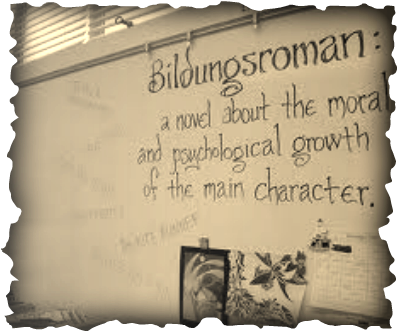
This contribution, within the framework of the Bildungsroman and beyond rigid and prescriptive categorizations, foregrounds forms of writing and narrative modes that recount formative experiences of subjects—particularly women—for whom the act of narrating represents an extraordinary opportunity for self-recognition and self-formation.
More specifically, within the domain of Life-Writing Studies, attention is devoted to forms such as Visual Autobiography, which, in the context of contemporary digital-visual culture, may be regarded as a pedagogically significant mode of self-representation.
These forms foster reflection on visual, political, social, and ethical dimensions, recovering the “power of memories” (Brezzi, Gabrielli, 2022) and conveying experiences of resistance, growth, and transformation.
Accordingly, the analysis will consider narratives that, through the re-signification of identity trajectories, may be understood as new modalities of the novel of formation.