
The "ecological-mountain" novel: new ways of educating to complexity
Article Sidebar
Main Article Content
Abstract
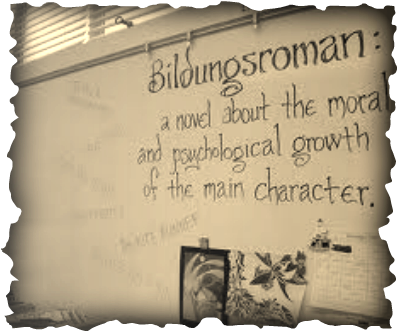
The Bildungsroman is, by its very nature, tied to the pedagogical value of “giving form,” of helping individuals to find their own configuration (Abene, 2021; D’Antuono, 2021). While it represents a consolidated literary tradition, this genre also carries within itself the potential to respond to the “forms” demanded by spatial and temporal contingencies, thus becoming a reservoir for contemporary concerns. In an era repeatedly described as the Anthropocene, the ecological question is among those that most urgently require reflection and action (Malavasi, 2008; Mortari, 2020; Baldacci, 2021). Starting from these premises and through the analysis of selected novels, the present contribution introduces a particular form of contemporary Bildungsroman, which will be defined as the “ecological-mountain” novel. This expression indicates, on the one hand, the ecological purpose that substantiates the pedagogical value of the genre, and, on the other, the contextual realization of “formation” within the mountain environment – considered capable of fostering a principle of responsibility (Jonas, 1984; Morin, 2011; Ceruti, 2018).